
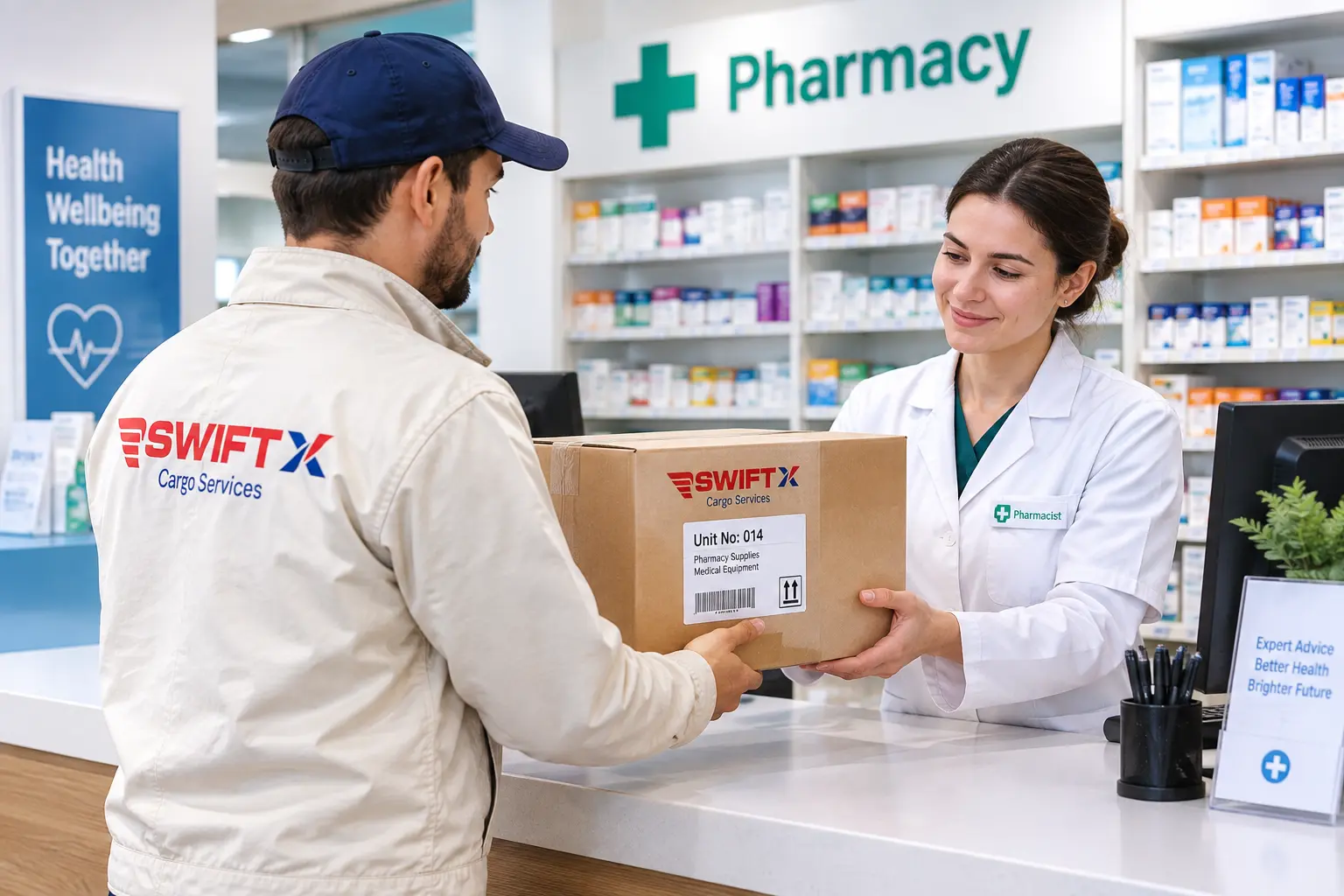
Medical equipment delivery is not one kind of job. A walking frame, a blood pressure monitor and a box of dressings all travel in different ways, and a patient sample follows its own rules. Below we explain how to send medical equipment by courier, and what to check first so the item arrives clean, safe and on time.
Tell Us What It Is Before You Book
Say whether the item is equipment, supplies, medicine or a sample. Each is handled in a different way, so we check the job against our service before you book.
The 6 Checks at a Glance
- Say exactly what the item is
- Check batteries, power and gas
- Clean used equipment and say so
- Pack it for the journey
- Plan access at both ends
- Tell us about samples and cold items
What Counts as Medical Equipment and Supplies?
Medical equipment is anything used to diagnose, treat or support a patient, such as monitors, mobility aids, nebulisers, walking frames and test devices. Supplies are the items that get used up, such as dressings, gloves and first aid stock. Most of these can travel as a standard courier job when their size, weight, packing and handling needs are suitable. The checks below suit a single walking frame and a medical supplies delivery for a clinic or care home.
Check 1: Say Exactly What the Item Is
Write down what it is in plain words. “Medical” is not enough. “Folding wheelchair with a battery fitted” or “box of 200 dressings” tells us far more. Include the model name or part number if it has one. A clear description lets us match the right van to the job, so there are fewer surprises on the day.
Check 2: Batteries, Power and Gas
Many devices run on batteries, and some run on gas. Lithium batteries and oxygen cylinders may count as dangerous goods when they travel by road, so tell us before you book, not on the day. For cylinders, read the government’s guidance on transporting cylinders of compressed oxygen. Switch the device off, follow the maker’s manual on whether the battery stays in or comes out, and keep the charger and leads with the device.
Check 3: Clean Used Equipment and Say So
If the equipment has been used on a patient, clean it before collection and follow the maker’s cleaning steps. The MHRA guidance on managing medical devices is written mainly for hospital and community based organisations. It says items sent for repair, and loaned items returned to a supplier, should be decontaminated before they travel. That means cleaned and made safe. They should also carry a label or form that shows this was done. Tell us when you book if the item has been used, so the driver knows what is being collected.
Check 4: Pack It for the Journey
Use the original box or case if you still have it, because it was made to fit the item. If not, wrap each part and use a strong box with padding on every side. The same MHRA guidance says devices should be appropriately packaged and secured, with strong packing materials, sharp edges protected and no damage in transit. That matters most when transporting medical equipment with screens, dials or moving parts. Keep leads and small parts together in a labelled bag inside the box.
Keep patient names and details off the outside of the package. Put paperwork, such as the cleaning form, in a sealed envelope that travels with the item. For glass parts or delicate screens, see our advice on how to package fragile items for shipping.
Check 5: Plan Access at Both Ends
Hospitals, clinics and care homes often have their own delivery rules. Ask each site where the driver should go, who to ask for and when the entrance is open. Give us a name and a phone number at both ends, and say who will sign for the item. If it is heavy, such as a mobility scooter or a powered wheelchair, check the doors, lifts and ramps first and tell us about any stairs.
Our fleet has six types of van, and the Luton van is available with a tail lift. See our van sizes and payloads to compare them. To measure the route from the door to the van, read how to send oversized items.
Check 6: Tell Us About Samples and Cold Items
Equipment and samples follow different rules. A sample can need set packaging, marking and temperature control under UK transport rules, and classifying it is the sender’s responsibility. The GOV.UK guidance on packaging and transport requirements for patient samples (UN3373) explains the three layers of packaging and the marking. We carry samples, medicines and items that must stay cold, including fridge items and items packed with dry ice. If your job includes dry ice or a fridge item, tell us when you book. We then confirm the packing and the van arrangements with you before collection.
Read how our medical courier service handles samples and pharmacy orders if you want the full picture.
Medical Equipment Delivery in Liverpool
Medical equipment delivery in Liverpool often runs between pharmacies, clinics, care homes and healthcare suppliers. If you need it today, a driver in Liverpool usually collects within an hour of booking, and the delivery is usually finished within a few hours. See urgent same day delivery in Liverpool for how those jobs work.
What to Include When You Ask for a Medical Equipment Quote
The basics are in our answer to what information does a courier need. For medical equipment, add these details:
- The item itself, and whether it counts as equipment, supplies, medicine or a sample
- Whether it has a battery or gas cylinder, and if it is fitted or loose
- Whether it needs to stay cold, or is packed with dry ice
- Whether it has been used, and if it has been cleaned
- The size and weight, and say if you are not sure of them
- Your deadline, where the driver should report, and the opening hours at both addresses
- Who will hand it over and who will sign for it, with a phone number for each
Frequently Asked Questions
Ready to Book Your Medical Equipment Delivery?
Describe the item, how big and heavy it is, and how soon it needs to arrive. You can reach SwiftX Cargo Services on +44 7424 837007, or tap the Get a Quote button below. The price is fixed before you book.