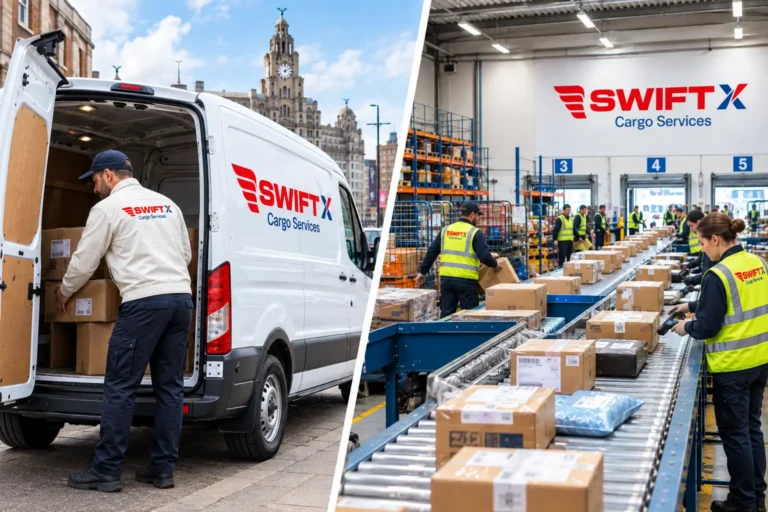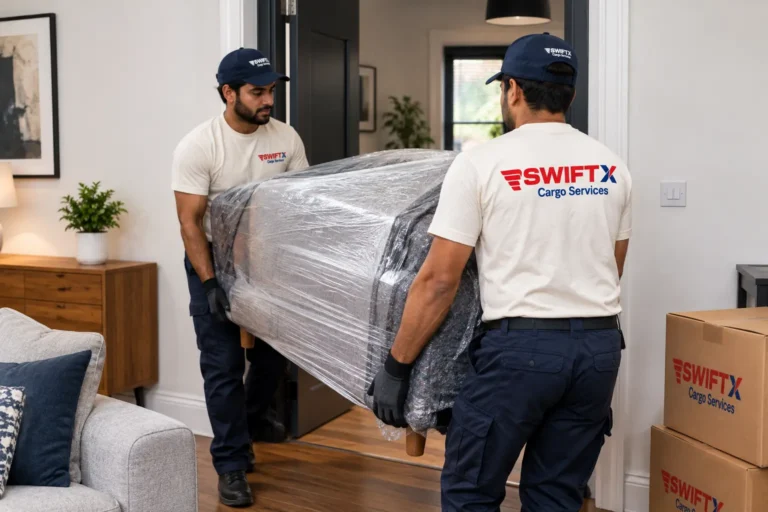

Knowing how to book a courier saves time, because a missing detail can slow down a collection. A common first question is: what do you need to book a courier? The answer is short. You need two addresses, what you are sending, its size and weight, and when you need it. This guide lists all eight details, shows how to measure and weigh an item at home, and explains what happens next.
How to Book a Courier in 4 Steps
These four steps cover how to book a courier collection from start to finish.
- Gather the eight details in the next section.
- Measure and weigh the packed item.
- Send the details by phone, or get a quote for a courier online.
- Read your price quote. There is no obligation, so you can say yes or no. If you say yes, we arrange the collection.
Once your job is booked, tracking and proof of delivery reach you by email, text or call.
What Information Does a Courier Need?
Have these eight details ready before you ask for a quote:
- The collection and delivery addresses, with postcodes
- A contact name and phone number for the collection and the delivery
- What you are sending, and how many items or pieces there are
- The size, as length by width by height in centimetres
- The weight, or your best estimate of it
- How it is packed, whether it is fragile or must stay upright, and whether it is ready to go
- When you need it collected, and any deadline for delivery
- Access and loading details, such as stairs, parking, gates or a loading bay with set hours
If the item is fragile, see how to pack fragile items before collection day.
You Do Not Need Every Detail Before You Ask
If you are missing some of these, that is fine. Share what you know and say which parts are estimates. “A boxed flat screen TV”, “three boxed office chairs” or “two pallets of stock” helps far more than a blank space. We can often start from that and ask follow up questions before the van and the price are agreed. The more exact the details are, the more reliable the van choice and the price will be, especially for anything heavy or unusual.
Why the Details Matter
Size and weight decide which van is sent. If the van turns out to be too small, the collection may need to be rearranged. The addresses set the route and the timing, and an access problem such as a narrow street can make a collection take longer. Our page on courier vans and the loads they carry shows what each van can hold.
How to Measure a Parcel for Courier Collection
Measure the packed box, not just the product inside. A boxed television is bigger than the screen alone. Put the box on a table and measure three sides in centimetres. Length is the longest side, width is the shorter side across, and height is from the table to the top. Round each figure up, not down.
No tape measure? A ruler works for small items, and an A4 sheet of paper is 21 by 29.7 centimetres, so you can compare. For an oddly shaped item, measure to the furthest point in each direction, because that is the space it needs in the van. A standard UK pallet is usually 120 by 100 centimetres. A Euro pallet is 120 by 80, so check which one you have if the exact size matters. For furniture and other large items, read how to send bulky items.
How to Weigh a Parcel Without Scales
First, use what you have at home. Royal Mail says kitchen scales suit smaller items and bathroom scales suit bulkier ones. Its page on how to weigh and measure a parcel also says to include the box and any packing in the weight. If the item is too big for a scale, weigh yourself, then weigh yourself again while holding it, and take away the first figure. Only try this with something you can lift safely and comfortably, and never lift a heavy or awkward item just to find its weight.
Still no figure? Compare the item with things you know, such as a bag of sugar at one kilogram. You can also look for the weight on the product label or the seller’s website. This will not be exact, so say that the weight is an estimate, and round up rather than give a number you suspect is too low.
What Counts as an Access Restriction
Access details change the van and the time a collection needs, so mention them when you book. Examples are a narrow street a bigger van cannot enter and no parking near the door. Others are an entry system that needs a code or a call, and stairs with no lift for a heavy item. A loading bay may open only at set hours. None of these stops a job by itself. If we know early, we can plan the right van and enough time. If the item must be carried up or down stairs, or collected from above ground level, say so too.
Plan who will let the driver in. If nobody can, we may not be able to collect the item. Read what happens after a failed courier collection to see how that works. Gated sites matter too, so for a business park, read courier collection from a business park.
Collection Details That Matter in Liverpool
Access varies across Liverpool. A city centre office may have a reception desk or a lift. A residential street may have limited parking. Business premises around the Baltic Triangle, Speke or Garston may have gated access or set loading areas. You do not need a long explanation. Just tell us what kind of place it is and anything unusual about getting in or out.
How to Arrange a Courier Collection
To arrange a courier collection, start with the day you need it collected. The earlier you ask, the more choice you have of day and time, and a same day request depends on where our vehicles are at that moment. You can book a courier collection by phone, or ask for a quote through our online form first.
If you want to arrange a courier pick up for a set time, say so when you first get in touch, because the van and the driver are planned around it. Whether you are arranging a courier for yourself or organising a courier pick up for work, the details we ask for are the same eight listed earlier in this guide.
Booking a courier is quick once those details are ready. After you accept the quote, we arrange delivery to the address you gave us. If you need to organise a courier pick up for a regular job, such as a weekly collection, tell us how often it repeats, or see our scheduled courier service in Liverpool.
Not Sure Which Van You Need?
You do not have to choose. Tell us the size and weight of the load and the two addresses, and we pick a suitable van from our six types. If you are still comparing couriers, read how to choose a courier service before you decide.
Frequently Asked Questions
Ready to Book a Courier?
With your details ready, the next step is a quote. If your job needs a van for your load alone, read about our dedicated courier service. For everything else, call SwiftX Cargo Services on +44 7424 837007, or press Get a Quote below. If a detail is missing, we tell you what else we need.